
The historical journey of gambling tracing its evolution through the ages
The historical journey of gambling tracing its evolution through the ages
The Origins of Gambling
The practice of gambling dates back thousands of years, with its origins often traced to ancient civilizations. Archaeological evidence suggests that various forms of gambling were present in ancient China, where players used rudimentary dice made from animal bones. Similarly, the Romans and Greeks embraced games of chance, incorporating them into their social fabric and festivities, highlighting a cultural acceptance of risk and uncertainty. If you’re interested in exploring this fascinating topic, you can visit site for more insights.

These early forms of gambling were not just about chance; they often involved strategy and skill. The emergence of betting on athletic contests in ancient Greece laid the groundwork for structured forms of gambling. Over the centuries, as societies evolved, so did the methods and forms of gambling, transitioning from simple games to more complex betting systems.
The Middle Ages and the Rise of Formal Gambling
The Middle Ages marked a pivotal point in the history of gambling, characterized by the establishment of formal gambling houses and the creation of more organized betting games. During this time, card games gained popularity across Europe, giving rise to the development of games such as Poker and Blackjack. These games not only became a source of entertainment but also a means to test skill and strategy against other players.
Regulation began to emerge, with monarchs imposing taxes on gambling, highlighting its growing significance in society. Gambling houses became prominent in cities, and by the late Middle Ages, they were frequented by nobility and commoners alike. This period set the foundation for the modern casino, as it introduced concepts like house odds and betting systems.
The Industrial Revolution and the Birth of Casinos
The Industrial Revolution of the 18th and 19th centuries brought monumental changes, including advancements in technology that significantly impacted gambling. The establishment of the first official casino, the Casino di Venezia, in 1638 marked a major milestone in the evolution of gambling establishments. This era witnessed the rise of lavish casinos in Europe, catering to the elite and providing an environment for socializing and entertainment.
With the development of mechanical devices, games like slot machines emerged, further diversifying gambling options. The allure of casinos expanded beyond mere games of chance, becoming destinations for luxury, leisure, and glamour. As casinos spread across Europe and America, they began to shape the cultural perception of gambling, transitioning from taboo to a celebrated pastime.
The Digital Revolution: Online Gambling Emerges
The late 20th century ushered in a digital revolution that transformed many industries, including gambling. The introduction of the internet made it possible for players to engage in gambling from the comfort of their homes. Online casinos began to proliferate in the 1990s, offering a diverse range of games and the convenience of playing anytime, anywhere.
Online gambling has continued to evolve, with the incorporation of technology like live dealer games, mobile gaming, and cryptocurrencies. This shift not only expanded the audience for gambling but also increased accessibility for players worldwide. Today, online casinos offer extensive selections, often rivaling their brick-and-mortar counterparts, catering to a variety of player preferences and styles.
Exploring the Current Landscape of Gambling
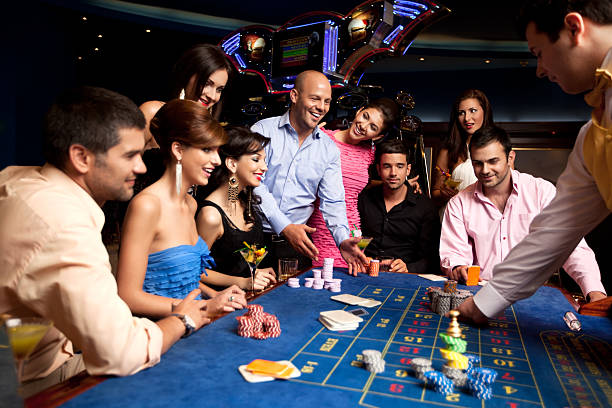
The current landscape of gambling is marked by a fusion of traditional and modern practices. While brick-and-mortar casinos continue to thrive, particularly in tourist-heavy locations, online gambling has surged in popularity due to its convenience and variety. Many players now enjoy the best of both worlds, seamlessly transitioning between physical casinos and online platforms.
As gambling continues to evolve, responsible gambling measures and regulations have become increasingly important to protect players. The rise of mobile gambling apps and virtual reality experiences further indicates that the industry will continue to adapt and innovate. Understanding this historical journey offers valuable insights into the present and future of gambling.